We're told that someone who reads a lot must be smart. But, I don't think that's the full story.
Reading widely is only half of it. The other half is being discerning about what you read, which is exactly why we place so much value on recommendations. We trust a good recommendation because filtering information is genuinely hard. What we read doesn't just inform us, it shapes us too. It becomes part of how we see the world, and over time, part of who we are.
It's why someone can read voraciously and still end up tragically stunted. The Atlas Shruggers and "The Prince"-quoters of the world are "well-read" but also often, the least curious people in the room. The books confirmed what they already suspected about themselves and the world, and that was enough.
Words carry more weight than we usually acknowledge. There's a well-known observation about the Japanese language historically lacking a distinct word for blue, with research suggesting this genuinely affected how speakers perceived and categorised colour. Language doesn't just describe reality, in some meaningful sense it constructs it. The stories we absorb set the boundaries of what we think is possible. Which means the stories we're fed, and by whom, matter enormously.
There's gold in them hills
Who actually got rich in the gold rush? Not the prospectors. That was a gamble. It was the people selling the shovels. Samuel Brannan made his fortune selling shovels for around $30 each during the California rush, which is close to $1,000 in today's money.

He didn't dig for anything, why bother with the risk?
But here's the thing about that model. It only works as long as new people keep arriving. To keep the arbitrage going you need to keep the story alive, you need people to believe the gold is still there and still worth chasing. The better the story, the longer the market lasts.
So what are you selling, and to whom?
What's in it for you?
This is where incentives come in, and it would be naive to pretend otherwise. Everyone's got them, the question isn't whether the person speaking to you has an angle, they do (I promise). The question is whether their incentives happen to align with yours. A good doctor profits when you stay healthy. A good financial adviser profits when your portfolio grows. Alignment is what you're looking for, not purity.
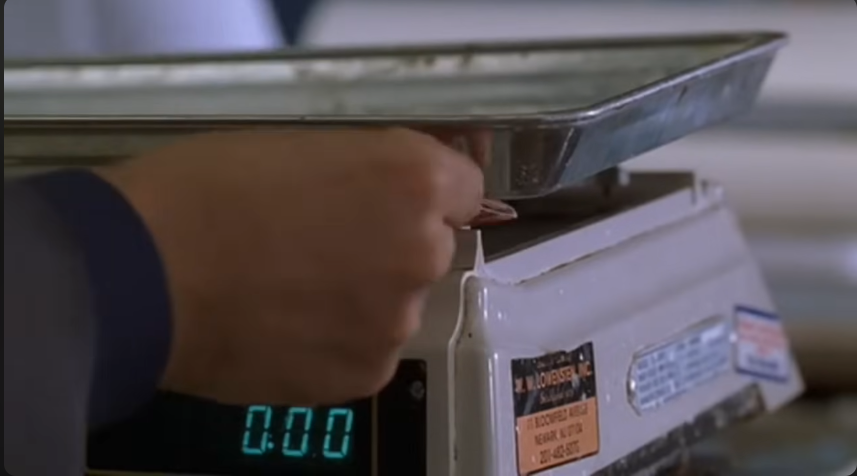
What you need to watch for is when someone has their thumb on the scale. When a particular framing of a problem happens to benefit the person doing the framing. When emphasising a specific fear, or downplaying a specific risk, quietly serves their interests more than yours.
To keep that story credible, to keep new people arriving and believing, you need more than a good pitch. You need people who will carry the story forward as if it's their own. Which means you need believers who sound like experts.
I wanna be like yoo-hoo-hoo

There's a particular trap worth naming alongside this. Sometimes a person becomes so familiar with consuming a product that they begin to mistake familiarity for understanding. They know the the vocabulary and the feel of using it, but that's just enough to perform fluency convincingly, including to themselves.
This isn't always cynical. Often they genuinely believe it. Repeated exposure creates a kind of false intimacy with a subject, where the map starts to feel like the territory. They've used the thing enough times that the gap between user and maker starts to seem smaller than it is. It isn't.
The cynical version is more deliberate. You see it in people who have learned that adopting the language of a community is a faster route to its trust than earning it. They speak the dialect. They reference the right things. They perform membership without paying the dues.
Real expertise doesn't work like this. It accumulates slowly, through iteration and failure and revision, which means the honest answer from people who actually know things is often "we're not sure yet." That window of uncertainty is uncomfortable, and the con doesn't need to be sophisticated to exploit it. It just has to be confident and early.
In both cases, the distinction that gets lost is a meaningful one. There is a real difference between knowing how to use something and understanding how it works.
Contagious pantomime
We absorb signals of credibility constantly, whether we're aware of it or not. The vocabulary someone uses. The names they drop. The confidence with which they deliver a take. Over time, a person can ingest enough of these signals that they begin to emit them back out. Not deliberately, necessarily. But the output starts to look a lot like the input. The shape of authority without the substance that originally produced it.

This is distinct from simply being wrong. Being wrong is recoverable. This is something more subtle: a person who has learned to pattern-match credibility well enough to pass, and who has, crucially, convinced themselves in the process. The performance becomes the belief.
This kind of borrowed authority has a way of moving through networks fast, because most people are also consumers of authority signals rather than evaluators of the underlying substance. So the person who learned the dialect, absorbed the posture, and filled in the gaps with confidence, can find themselves treated as a source. And then they become one, in a social sense, regardless of whether they should be.
The problem with epistemic humility
"The trouble with the world is that the stupid are cocksure and the intelligent are full of doubt." — Bertrand Russell
The producers of actual authority, the people who built the understanding from the ground up, tend to be more hesitant, more qualified, more aware of what they don't know. Which makes them, paradoxically, easier to dismiss next to someone who has none of those doubts.
This is the thread that runs through all of it. The books that make you more certain are suspect. The people who make you more certain are suspect. The information diet that leaves you feeling like you've got it all figured out is the one most worth interrogating.
Genuine expertise tends to present with more uncertainty, not less. It knows where the edges of its own knowledge are. It qualifies. It hesitates in the right places. These are not weaknesses, but they're easy to misread as such next to someone performing confidence they haven't earned.
So, dine carefully. Ask what the person speaking wants. Ask whether over-emphasising this problem, or under-emphasising that one, benefits them. Ask whether the book you're reading is making you more curious or more certain.
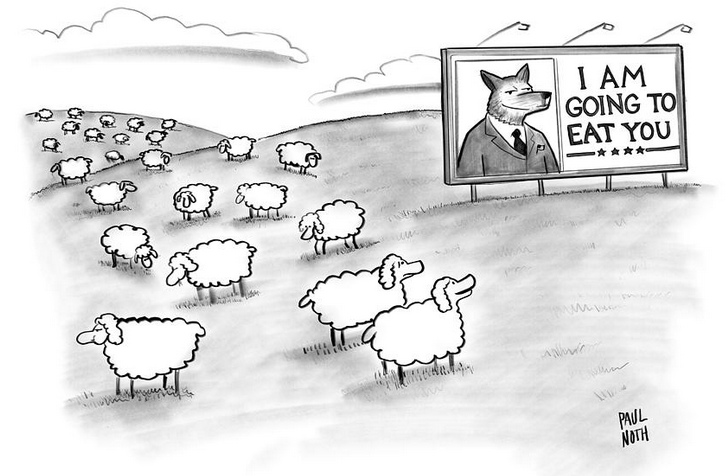
The answer tells you most of what you need to know about whether you're being fed or just being sold to.